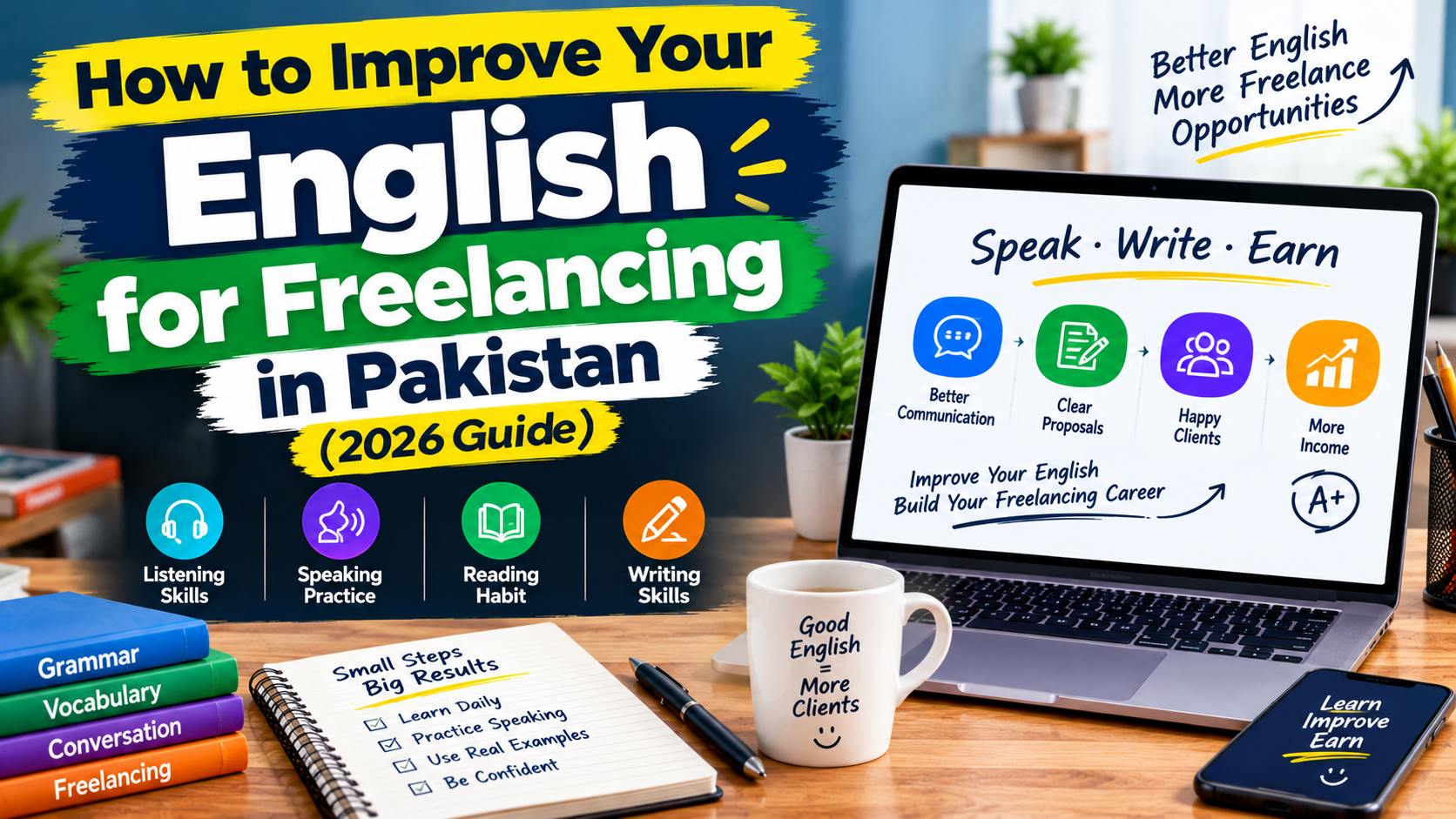
Many Pakistani freelancers have good skills but hesitate to apply for international jobs because they feel their English is weak. The good news is that you do not need perfect English to start freelancing. You need clear, simple and polite English that a client can understand easily.
In this guide you will learn what level of English you really need, how to improve it for free, and how to write better proposals and messages. Please remember that improvement takes time, so practice a little every day.
How Much English Do You Really Need?
For most freelancing work, clients care about three things:
- Can I understand you? Your messages should be clear.
- Do you understand my request? You should read the job post carefully and answer the right question.
- Are you polite and professional? A respectful tone builds trust.
You do not need fancy words or long sentences. Short and simple sentences are better. However, the level you need depends on the skill. A content writer needs strong writing, while a graphic designer or video editor mostly needs clear messages and good understanding of instructions.
Why English Matters in Freelancing
- Proposals and profiles: Your Upwork profile and proposals are written in English. Mistakes can make a client doubt you.
- Client communication: You will chat, ask questions and explain progress.
- Understanding instructions: Misunderstanding a request leads to wrong work and bad reviews.
- Gig descriptions: On Fiverr, your gig description is your sales page.
If you are still choosing a skill, read our guide on the best free skills to learn for freelancing in Pakistan.
Step 1: Test Your Current Level Honestly
Before you start, check where you are. Write 5 sentences about your skill and why a client should hire you. Then ask yourself:
- Are my sentences short and clear?
- Do I make the same spelling or grammar mistakes again and again?
- Can I read a job post and understand the main request?
Save this first paragraph. After one month, write another and compare. You will see your progress.
Step 2: Build a Daily Habit (20 to 30 Minutes)
A small daily habit works better than studying for five hours once a week. Try this simple routine.
- 10 minutes reading: Read short articles, news or blog posts in English.
- 10 minutes writing: Write a few lines about your day or your skill.
- 5 to 10 minutes listening or speaking: Watch a short video and repeat a few sentences aloud.
Step 3: Use Free Resources
These are well-known free places to practice. Always use official websites.
- BBC Learning English: free lessons on vocabulary, grammar and listening.
- British Council LearnEnglish: free exercises and reading practice.
- Duolingo: a free app with short daily lessons. The free version is enough for beginners.
- YouTube: choose a few clear English teachers and follow them regularly.
- Grammar checkers: free versions of tools like Grammarly can help you find spelling and basic grammar mistakes. Use them to learn from your mistakes, not just to copy corrections.
Tip: Do not jump between ten resources. Choose two or three and stay with them for at least a month.
Step 4: Learn the English You Need for Your Work
Instead of learning random words, collect words and sentences related to your skill. For example:
- Designers: logo, revision, deadline, draft, file format
- Writers: outline, topic, keyword, edit, tone
- Video editors: footage, clip, transition, subtitle, export
Write them in a notebook or phone note with a short example sentence.
Step 5: Practice Writing Proposals and Messages
You can practice with real situations. Here are some simple, polite phrases you can use.
Starting a message:
- “Hello, thank you for your message.”
- “I read your project details carefully.”
Asking a question:
- “Could you please share more details about the project?”
- “Do you have a preferred deadline?”
Giving an update:
- “I have completed the first draft.”
- “I will send the final files by tomorrow.”
Ending a message:
- “Please let me know if you would like any changes.”
- “Thank you for your time.”
For a full proposal structure, see our guide on how to create an Upwork profile in Pakistan.
Step 6: Fix Common Mistakes
Many beginners repeat the same mistakes. Here are a few examples.
- Too long and confusing sentences. Weak: “I am very much experienced in the field of designing and I can do all types of work for you.” Better: “I design logos and social media posts, and I can deliver your first draft in two days.”
- Overusing words like “sir” and “dear.” A simple “Hello” or the client’s name is enough.
- Copying templates blindly. Clients often notice copied messages. Write in your own words.
- Promising too much. Avoid lines like “100% guaranteed result.” Be honest and realistic.
- Ignoring spelling. Always read your message once before sending.
Step 7: Practice Speaking Without Fear
Some clients prefer voice or video calls. To improve speaking:
- Read a short paragraph aloud every day.
- Record yourself on your phone and listen to it.
- Talk to a friend in English for a few minutes.
- Prepare a short introduction about yourself and your skill, and practice it until it feels natural.
It is fine to say, “Could you please repeat that?” Clients prefer honesty to guessing.
A Simple 30-Day English Plan
Week 1: Daily 20 minutes of reading and learning basic phrases for your work.
Week 2: Add daily writing practice. Rewrite your Fiverr gig description or Upwork overview.
Week 3: Practice writing 3 to 5 sample proposals or client messages.
Week 4: Practice a spoken introduction and review your own writing from week 1.
If you are ready to put your English to use, read our guide on how to create a Fiverr account in Pakistan.
Mistakes to Avoid
- Waiting to be perfect. Start applying while you improve.
- Using only translation tools. They can give strange results. Use them to understand, then write your own sentences.
- Copying AI or online text without checking. Clients can usually tell, and it can hurt trust. Use tools to help you learn, not to replace your voice.
- Studying without practice. Writing and speaking are skills, so practice them.
- Paying for “fast English” courses that guarantee results. Real improvement takes steady practice.
Frequently Asked Questions
Can I freelance with weak English?
Yes, many people start with basic English. Use simple sentences, double-check your messages and keep improving. Some skills, like design and video editing, need less writing than others.
How long does it take to improve English?
It depends on your starting level and practice. Many learners notice improvement in a few weeks of daily practice, but real fluency takes longer.
Is it okay to use grammar tools?
Yes, as a helper. Check each suggestion and try to understand the mistake so you do not repeat it.
Do I need to speak English fluently to get clients?
Not always. Many freelancers work through written chat. Still, basic speaking helps if a client wants a call.
What is the fastest way to improve?
Daily practice, regular writing and learning words related to your work.
Conclusion
You do not have to wait for perfect English to start freelancing. Focus on clear, simple and polite communication, practice a little every day, and learn the words you need for your skill. Over time, your confidence and your results will both improve.
Next, read our guide on how to avoid online earning scams in Pakistan.
Disclaimer: This article is for general information only. Results vary from person to person. Please use the official websites of the learning platforms mentioned for the latest information.